Ditapis dengan
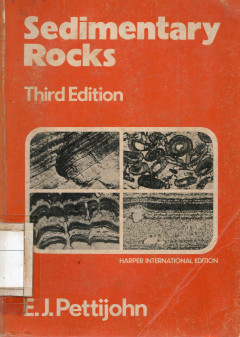
Sedimentary Rocks (Third Edition)
A sedimentary deposit is that body of solid materials accumulated at or near the surface of the earth under the low temperatures and pressures which normally characterize thie environment. The sediment is generally, but not always, deposited from a fluid in which it was contained either in a state of suspension or solution. This definition encompass most of the materials considered sediments, a…
- Edisi
- -
- ISBN/ISSN
- 0-06-045191-2
- Deskripsi Fisik
- x; 614 hlm
- Judul Seri
- -
- No. Panggil
- PVG 552.5 Pet s c.1 (3)
Sedimentary Rocks (Second Edition)
Geology is primarily history-a history of the earth. Petrology has to do with the history of rocks and sedimentary petrology is concerned with the history of the sedimentary rocks. Statigraphy also has to do with geologic history. The primary task of stratigraphy is to ascertain the order of superposition of the strata at any given place and then to integrate the local geologic column thus cons…
- Edisi
- -
- ISBN/ISSN
- 0-06-045191-2
- Deskripsi Fisik
- xvi; 701 hlm
- Judul Seri
- -
- No. Panggil
- PVG 552.5 pet s c.1 (2)
Basalts
Speculation about basalts began early. Pliny's Natural History was published about A.D.77 (see Adams, 1938) and classified basalt as black marble, but he referred to most dense building stone as marble, so probably was implying no genetic link. Although some ancient Greeks and Romans correctly guessed that basalts were related to volcanism, at the end of the Dark Ages basalts was thought to be …
- Edisi
- -
- ISBN/ISSN
- 0-442-27769-5
- Deskripsi Fisik
- xvii; 430 hlm
- Judul Seri
- -
- No. Panggil
- PVG 552.26 Rag b c.1
Economic Mineral Deposits
Geologist distinguish between mineral reserves and mineral resources. The term resource refers to hypothetical and speculative, undiscovered, subeconomic mineral deposits or an undiscovered deposit of unknown economic. Reserves are concentrations of a usable mineral or energy commodity, which can be economically and legally extracted at teh time of evaluation. Today, mineral resources have beco…
- Edisi
- -
- ISBN/ISSN
- -
- Deskripsi Fisik
- 581 hlm; gambar;tabel
- Judul Seri
- -
- No. Panggil
- PVG 553 Bat e c.1
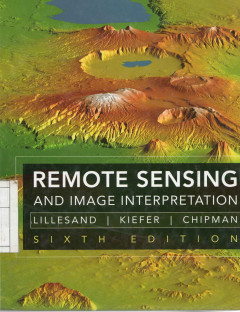
Remote Sensing and Image Interpretation : Sixth Edition
This book is primarily for use in introductory courses in remote sensing and image interpretation. Given the many diverse apllications of remote sensing, courses on the subject appeal to students having a wide range of academic backgrounds and interests. We have written this book in anticipation of the variety of settings in which remote sensing might be used and have made this discussion “di…
- Edisi
- -
- ISBN/ISSN
- 978-0-470-05245-7
- Deskripsi Fisik
- 737 hal.;gbr.
- Judul Seri
- -
- No. Panggil
- PVG 612.367 LIL R c.1
Chemical Principles, Properties, and Reactions
Science is a systematic study of the physical world that employs a method of inquiry called the scientific method. A cornerstone of the scientific method is the gathering of Knowledge through observation and measurement. All measurements have limitations of accuracy and precision and scientists often convey the limitations of accuracy and precision and scientiest ofthen convey the limitations o…
- Edisi
- -
- ISBN/ISSN
- 0-201-10423-7
- Deskripsi Fisik
- 382 hlm
- Judul Seri
- -
- No. Panggil
- PVG 552.53 hen c c.1
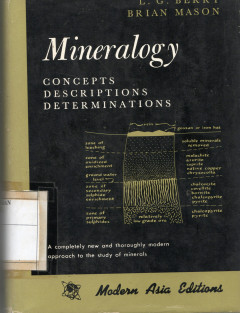
Mineralogy Concepts Descriptions Determinations
Mineralogy is the science of minerals, which are the naturally occurring elements and compounds making up the solid parts of the universe. We generally think of mineralogy in term of the materials of the earth's crust. However, meteorites provide us with samples of minerals from outside the earth, and geophysical measurements furnish some indication of the nature of the minerals below the acces…
- Edisi
- -
- ISBN/ISSN
- -
- Deskripsi Fisik
- xi; 600 hlm
- Judul Seri
- -
- No. Panggil
- PVG 553 Ber m c.1

Mineral dan Energi Kekayaan Bangsa ; Sejarah Pertambangan dan Energi Indonesia.
Indonesia merupakan negeri kepulauan terluas di Indonesia, yang memiliki daratan sekitar dua juta kilometer persegi meliputi 17.500 lebih pulau besar dan kecil. Pulau yang satu dengan yang lain disatukan oleh laut dan secara keseluruhan luas wilayah lautannya sekitar dua setengah kali luas daratan. Deretan pulau yang berbentuk bak untaian permata berwarna hijau itu membuah banyak orang, baik an…
- Edisi
- -
- ISBN/ISSN
- -
- Deskripsi Fisik
- xvii; 490 hlm
- Judul Seri
- -
- No. Panggil
- PVG 553 Dar m C.1
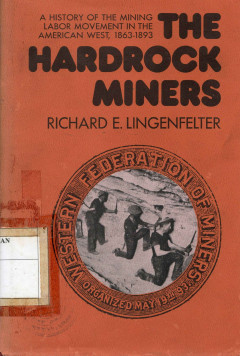
The Hardrock Miners
The history of the early mining labor movement in the West is the history of the hardrock miner. It is the story of his hopes and trials, his joys and hardships, his aspirations and grievances, his successes and failures, It is shaped by his background, by the hazards of his daily work and by the chranging technology and management in his trade. The goals of the movement are a tribue to his com…
- Edisi
- -
- ISBN/ISSN
- 0-520-02468-0
- Deskripsi Fisik
- viii; 265 hlm
- Judul Seri
- -
- No. Panggil
- PVG 553 Lin h c.1
Microscopic Identification of Minerals
The recognition of minerals by means of their optical properties is doubt-less the single most widely used and most widely applicable method of mineral identification. Optical methods applied to minerals in thin section have long been used and were developed to a state of considerable refinement before the immersion methode became widely known. The first application of the immersion method was …
- Edisi
- -
- ISBN/ISSN
- 07-028055-X
- Deskripsi Fisik
- xiii ; 409 hlm;
- Judul Seri
- -
- No. Panggil
- PVG 553 Hei m c.1
 Karya Umum
 Filsafat
 Agama
 Ilmu-ilmu Sosial
 Bahasa
 Ilmu-ilmu Murni
 Ilmu-ilmu Terapan
 Kesenian, Hiburan, dan Olahraga
 Kesusastraan
 Geografi dan Sejarah