Ditapis dengan

The Eruption of the Merapi, Central Jawa In 1930
According daily reports from a mantrie-observer at Haron, during the first half of November 1930 there was many white vapour forning on the top of the Herapi, but nearly everyday he reported, that no stone avalanches were heard.
- Edisi
- -
- ISBN/ISSN
- -
- Deskripsi Fisik
- 5 hlm
- Judul Seri
- -
- No. Panggil
- PVG E.30-3

Penyelidikan Seismik Gunung Merapi Metoda dan Pengembangan
Metoda seismik merupakan metoda yang sangat penting dalam mempelajari gunungapi, khususnya di Seksi Penyelidikan Gunung Merapi (PGM) metoda ini sangat berguna dalam peramalan kegiatan G.Merapi dan dalam mempelajari sifat - sifatnya.
- Edisi
- -
- ISBN/ISSN
- -
- Deskripsi Fisik
- 21 hlm;tabel
- Judul Seri
- -
- No. Panggil
- PVG E.87-2
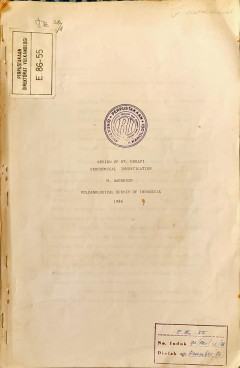
Review Of MT. Merapi Geochemical Investigation.
Volcanio gases are the primo mover of the eruptions which drags the magma up towards the earth's surface. And because of their much lower viscosity, volcanic gases are far more fast than the magma they come from to give some informa-tions.
- Edisi
- -
- ISBN/ISSN
- -
- Deskripsi Fisik
- 18 hlm
- Judul Seri
- -
- No. Panggil
- PVG E.86-55
Merapi Volcano.
Merapi volcano is one of the most active volcanoes of Indonesia. The activity was dated back to the year 1006, when the volcano erupted violently destroying the Kingdom of Mataram and buried the Borobudur temple.
- Edisi
- -
- ISBN/ISSN
- -
- Deskripsi Fisik
- -
- Judul Seri
- -
- No. Panggil
- PVG E.86-49

Laporan Kegiatan Perbaikan Peralatan Survey Geomagnit G. Merapi Bulan Juni 1986
Pekerjaan perbaikan peralatan survey Geomagnit dilapangan ini dilaksanakan bulan Juni 1986 berdasarkan surat perintah perjalanan dinas SFFD No. 425/2/1986 adalah merupakan kelanjutan dan penyempumaan pekerjaan terakhir sebelumya yang disana sini masih terdapat kekurangan disebabkan keterbatasan waktu pelaksanaan pekerjaan dan biaya.
- Edisi
- -
- ISBN/ISSN
- -
- Deskripsi Fisik
- 2 hlm.
- Judul Seri
- -
- No. Panggil
- PVG E.86-36
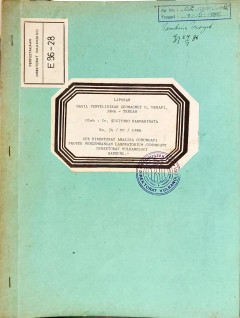
Laporan Hasil Penyelidikan Geomagnet G. Merapi Jawa Tengah.
Berdasarkan berita yang diterima dari Pos Pengamatan G. Merapi di Plawangan yang melaporkan adanya kemungkinan kerusakan pada peralatan geomagnet dari stasion lapangan Jumoyo yang selama beberapa waktu tidak berfungsi.
- Edisi
- -
- ISBN/ISSN
- -
- Deskripsi Fisik
- 3 hlm
- Judul Seri
- -
- No. Panggil
- PVG E.86-28
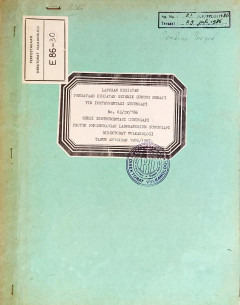
Laporan Kegiatan Pendataan Kegiatan Seismik Gunung Merapi.
Melakukan pendataan dan interprestasi kegiatan seismik hasil rekaman pesawat-pesawat seismograf di Gunung Merapi dari bulan Oktober 1985 sampai dengan bulan April 1986.
- Edisi
- -
- ISBN/ISSN
- -
- Deskripsi Fisik
- 4 hlm
- Judul Seri
- -
- No. Panggil
- PVG E.86-30
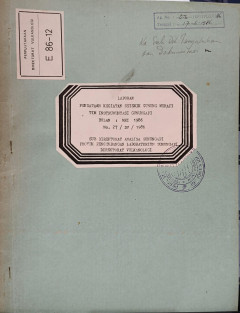
Laporan Pendataan Kegiatan Seismik Gunung Merapi Mei 1986
Untuk dapat mengetahui tingkat kegiatan suatu gunungapi maka perlu dilakukan secara menerus pendataan dan interpretasi kegiatan seismiknya. Sejak tahun 1982 kegiatan seismik G. Merapi dimonitor oleh 3 (tiga) jenis pesawat seismograph yaitu yaitu: Seismograph sistem pancar (RTS) di Yogyakarta, Seismograph elektromagnetik Tripartite Hosaka di Babadan dan Seismograph mekanik Wiehert di Plawangan. …
- Edisi
- -
- ISBN/ISSN
- -
- Deskripsi Fisik
- 7 hlm
- Judul Seri
- -
- No. Panggil
- PVG E.86-12

Laporan Perbaikan dan Kalibrasi Peralatan Seismograph Di Gunung Merapi dan Gu…
Pengecekan dan kalibrasi ini sangat perlu diadakan mengingat sebagian besar dari peralatan seismograph itu terdiri dari peralatan yang menggunakan component elektronika yang sering dapat berubah karakteristiknya akibat panas yang disebabkan oleh lamanya pemakaian yang terus menerus, sebab gangguan cuaca atau bisa juga berubah yang disebabkan oleh menurunnya tegangan power (batere).
- Edisi
- -
- ISBN/ISSN
- -
- Deskripsi Fisik
- 7 hlm
- Judul Seri
- -
- No. Panggil
- PVG E.85-76

Laporan Situasi Pendataan Lanjutan Kependudukan Dalam Daerah Terlarang G. Mer…
Pada tahap pertama kegiatan pendataan kependudukan hanya dapat dilakukan terbatas, pada bahaya langsung di dalam daerah sebaran awan panas letusan dan awan panas guguran, terutama di wilayah Kecamatan Srumbung.
- Edisi
- -
- ISBN/ISSN
- -
- Deskripsi Fisik
- 131 hlm;gmbr;tabel
- Judul Seri
- -
- No. Panggil
- PVG E.85-68
 Karya Umum
  Filsafat
  Agama
Agama  Ilmu-ilmu Sosial
  Bahasa
  Ilmu-ilmu Murni
  Ilmu-ilmu Terapan
  Kesenian, Hiburan, dan Olahraga
  Kesusastraan
  Geografi dan Sejarah