Ditapis dengan

Laporan Investarisasi Potensi Wisata G. Api Kelimutu Kab. Ende - Flores
Sebagai daerah kunjungan wisata yang sarat dengan objek wisata, pemberdayaan sektor pariwisata perlu ditata secara komprehensif dan terintegrasi dengan melibatkan berbagai komponen, seperti pemerintah pusat, pemerintah daerah, pengusaha, dan masyarakat. Penanganan sektor pariwisata yang baik dan terpadu dapat meningkatkan kualitas pariwisata yang sedang berlangsung dan juga dapat menggali poten…
- Edisi
- -
- ISBN/ISSN
- -
- Deskripsi Fisik
- 33 hlm;gambar;tabel;foto
- Judul Seri
- -
- No. Panggil
- PVG G.05-18

Pengukuran Situasi Puncak Gunung Colo dan Sekitarnya di P. Una - Una Sulawesi…
Gunung Colo terletak di pulau Una-Una, Wilayah Kecamatan Una-Una Kabupaten Poso Propinsi Sulawesi Tengah. Pulau ini terletak di teluk Tomini. Pada saat ini pencapaian ke pulau Una-Una bisa dari dua arah. Yakni dari Palu - Poso - Ampana - Wakai, dan juga dari Menado - Gorontalo - Wakai. Perjalanan dari Palu - Pose selama 7 jam dengan kendaraan Colt, sedangkan dari Poso Wakai lk 15 jam dengan kap…
- Edisi
- -
- ISBN/ISSN
- -
- Deskripsi Fisik
- 14hlm; gbr
- Judul Seri
- -
- No. Panggil
- PVG S.84-3

Laporan Pemantauan Kegiatan Gunungapi Arjuno Welirang Jawa Timur
Komplek G. Arjuno - Welirang adalah gunungapi tipe A yang mempunyai beberapa kerucut di puncak. Kerucut-kerucut ini terbentuk karena adanya perpindahan titik letusan yang terletak dalam satu garis lurus berarah Tenggara-Barat laut. Kelurusan ini merupakan sesar normal memanjang. G. Arjuno Welirang mempunyai banyak kawah.
- Edisi
- -
- ISBN/ISSN
- -
- Deskripsi Fisik
- 16 hlm;gambar;foto
- Judul Seri
- -
- No. Panggil
- PVG E.06-33

Laporan Inventarisasi Sifat Kimia Air/ Gas Gunungapi Papandayan, Jawa Barat
Gn. Papandayan merupakan salah satu gunungapi strato Tipe A, berbentuk kerucut terpancung yang dibangun oleh perselingan aliran lava dan endapan piroklastika aliran dan jatuhan, hingga saat ini Gn. Papandayan masih terus aktif dengan hembusan solfatara dan fumarola di dasar kawah serta bualan-bualan air.
- Edisi
- -
- ISBN/ISSN
- -
- Deskripsi Fisik
- 26 hlm;tabel;gambar
- Judul Seri
- -
- No. Panggil
- PVG E.05-11

An introduction to applied and environmental geophysics
The idea for this book originated in 1987 while I was preparing for lectures on courses in applied geology and environmental geo• physics at Plymouth Polytechnic (now the University of Plymouth), Devon, England. Students who had only very basic mathematical skills and little if any physics background found most of the so• called 'introductory' texts difficult to follow owing to…
- Edisi
- 2
- ISBN/ISSN
- 978-0-471-48536-0
- Deskripsi Fisik
- 696p. : ill . ; 21 cm
- Judul Seri
- -
- No. Panggil
- PMB 624.151 REY a
Sumber Daya Panas Bumi Indonesia Status Tahun 2025
Provinsi Aceh terbentuk melalui proses geologi panjang akibat pergerakan lempeng tektonik. Pada awalnya, wilayah ini berada di bawah laut dengan endapan batuan sedimen sejak zaman Paleozoikum. Kemudian, pada zaman Mesozoikum, lempeng Indo-Australia mulai menekan lempeng Eurasia, menyebabkan aktivitas gunungapi bawah laut dan pembentukan batuan beku di Pegunungan Bukit Barisan. Seki…
- Edisi
- -
- ISBN/ISSN
- -
- Deskripsi Fisik
- 114p.: ill;
- Judul Seri
- -
- No. Panggil
- 333 : 88 NIR s

Laporan Penelitian Deformasi G. Api Soputan, Sulawesi Utara dengan Metoda EDM
Penelitian defomasi di Gunungapi Soputan ini adalah pengukuran jarak dengan menggunakan EDM dan dilakukan untuk yang kedua kalinya sehingga dengan demikian data yang didapat pada pengukuran kedua ini akan disebandingkan dengan hasil penguuran yang pertama dan kemudian dilakukan analisa arah regangan yang terjadi pada tubuh Gunungapi Soputan ini.
- Edisi
- -
- ISBN/ISSN
- -
- Deskripsi Fisik
- 12hlm; gbr; tabel
- Judul Seri
- -
- No. Panggil
- PVG S.98-2

Peta Geologi Hasil Tafsiran Potret Udara dan Pemeriksaan Lapangan Daerah G. B…
Kegiatan Seksi Penginderaan Jauh, Sub Dit. Pemetaan Geologi, Dit. Vulkanologi dalam PELITA V tahun anggaran 1990/1991, diantaranya adalah melakukan penafsiran peta topografi dan ceking lapangan daerah 6. Banda Api dan sekitarnya, Maluku tengah. Penafsiran ini dimaksudkan untuk menentukan mbaran secara LIMLIM tentang kondisi geologi didaerah tersebut, terutama mengenai morfologi, stratigrafi, st…
- Edisi
- -
- ISBN/ISSN
- -
- Deskripsi Fisik
- 19 hlm.; peta
- Judul Seri
- -
- No. Panggil
- PVG G.91-6

Laporan Pengamatan Gempa Vulkanik G. Lewotobi Laki - Laki, Januari - Juni 1990
G. Lewotobi Laki-laki meletus terakhir pada 17 Pebruari dan 2 April 1990. Kegiatan sebelum letusan, secara visual tidak tampak gejala peningkatan kegiatan. Kecuali pada pada 28 yang sampai dengan 30 Januari 1990 teramati hembusan asap, dapat dianggap sebagai gejala awal sebelum letusan. Sebelumnya tidak pernah tampak kepulan asap dari kawahnya.
- Edisi
- -
- ISBN/ISSN
- -
- Deskripsi Fisik
- 5 hlm
- Judul Seri
- -
- No. Panggil
- PVG G.90-19
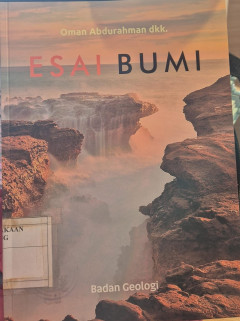
Esai Bumi
Ada sungai tercemar, jejak-jejak dahsyat tsunami dan bangkitnya cercah-cercah harapan, tambang belerang berbuah simalakama, ladang minyak ditambang rakyat, dan sederet kisah lainnya. Kisah-kisah yang berkaitan dengan batuan, mineral, fosil, struktur, proses, maupun waktu geologi Indonesia itu membetot perhatian fotografer. Dengan kemampuannya merangkai gambar, fotografer menyuguhkan sudut panda…
- Edisi
- -
- ISBN/ISSN
- 978-602-9105-57-5
- Deskripsi Fisik
- 200 hlm; gambar
- Judul Seri
- -
- No. Panggil
- PVG 550 ABD e C.1
 Karya Umum
  Filsafat
  Agama
Agama  Ilmu-ilmu Sosial
  Bahasa
  Ilmu-ilmu Murni
  Ilmu-ilmu Terapan
  Kesenian, Hiburan, dan Olahraga
  Kesusastraan
  Geografi dan Sejarah