Ditapis dengan
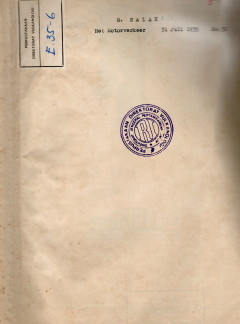
G. Salak Het Motorvekeer 1935
Οnlangs ontmoetten wij dr. M. Hartmann, en wat kan een journalist die enkele keeren met hem lief en leed deelde op den Merapi, in zoo'n geval anders vragen dan: „Wel, wanneer gaan we weer een vulkaan beklimmen?" Wat kan een vulkanoloog tegenover zóóveel brani-schopperij anders stellen dan: „Wanneer U wilt. Wij heb. ben een ruim assortiment voorradig, op Java alleen al 30 stuks. Dan o…
- Edisi
- -
- ISBN/ISSN
- -
- Deskripsi Fisik
- 4 hml.; gmbr
- Judul Seri
- -
- No. Panggil
- PVG E.35-6

Goenoeng Lawoe
Van Jarongan uit loopt eer breed paardonepad war do Me. To marasowoe. Volgen wij dat pad en stokon wo hos ravijn (wontolij van Kp. Tjomarasowoe) over, dan komen wij direct na ravijn op een boschpad uit, dat ook djalan ka Kawah" genoond wordt. Large dit pad kunnon wij de Kawah bereiken.
- Edisi
- -
- ISBN/ISSN
- -
- Deskripsi Fisik
- 56 hml
- Judul Seri
- -
- No. Panggil
- PVG E.35-1
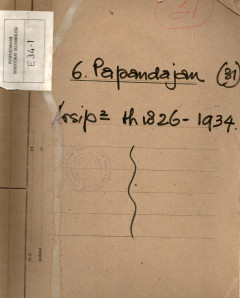
G.Papandayan - Arsip - Arsip Tahun 1826 - 1934
The Papandajang, situared in the Western part of the District Cheribon, in the province of Suka-pura, was formerly one of the largest volcanoes of the Island, but the greatest part of it was swallowed up in the earth, after a short but very severe combustion in the year 1772.
- Edisi
- -
- ISBN/ISSN
- -
- Deskripsi Fisik
- 81 hlm
- Judul Seri
- -
- No. Panggil
- PVG E.34-1
Bromo/ Foto-Foto
- Edisi
- -
- ISBN/ISSN
- -
- Deskripsi Fisik
- 6 hml.; gmbr.
- Judul Seri
- -
- No. Panggil
- PVG E.29-1
- Edisi
- -
- ISBN/ISSN
- -
- Deskripsi Fisik
- 6 hml.; gmbr.
- Judul Seri
- -
- No. Panggil
- PVG E.29-1
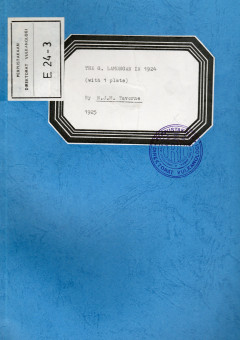
The G. Lamongan in 1924
The crater of the Lamongan vas visited for the last time in July 1925. Although since that tine no reports on abnornal phenomena were received, the crater was again reconnoitred at the beginning of February 1924, as we must be always on our alert, that the rostful situation of these previously so active volcano suddenly might change.
- Edisi
- -
- ISBN/ISSN
- -
- Deskripsi Fisik
- 7 hml.; tabel
- Judul Seri
- -
- No. Panggil
- PVG E.24-3
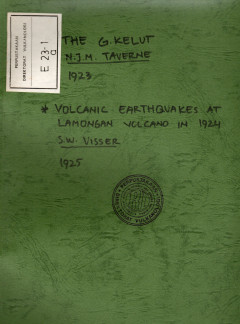
The Kelud, Volcanic Earthquakes At Lamongan Volcano In 1924
Volcanic quakes occurred since September 20,1924. E and Ne of Ranu Klakah treasures were formed. The tromometers Klakah repetend in October 135, in September 81, in December 105 shocks.
- Edisi
- -
- ISBN/ISSN
- -
- Deskripsi Fisik
- 18 hml.; tabel
- Judul Seri
- -
- No. Panggil
- PVG E.23-1
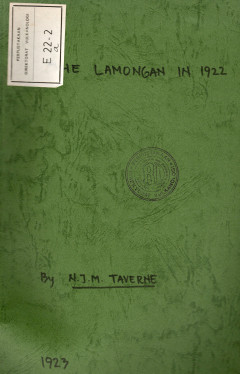
The Lamongan in 1922
During 1922 the G. Lamongan was often visited by the volcano guideship survey namely in April, June and August.
- Edisi
- -
- ISBN/ISSN
- -
- Deskripsi Fisik
- 6 hml.; tabel
- Judul Seri
- -
- No. Panggil
- PVG E.22-2

On Plugforming and The Eruption Character of G. Merapi
The summit of G. Merapi is formed by a lava-plug; a cratershaped decline, such as the most volcanoes possess, is not present. However it is known,-thanks to the many interest, with which the G. Herapi in the pant century obtained, that the volcano in another stage of eruptive activity certainly owed such a cratershaped decline.
- Edisi
- -
- ISBN/ISSN
- -
- Deskripsi Fisik
- 10 hml
- Judul Seri
- -
- No. Panggil
- PVG E.21-7

Small Eruption on December 6-7, 1920 in the Craterlake of G. Kelud
Except by the already quite quickly after-supply of water in the crater established calving off of the craterwall, the topography of the crater and therefore the correctness of the calculation of the supplied water was much more seriously hindered by a small eruption in the craterlake, which took place in the night of December6 to 7, 1928 (The big eruption lasted May 1920, 1919. Translater).
- Edisi
- -
- ISBN/ISSN
- -
- Deskripsi Fisik
- 3 hml
- Judul Seri
- -
- No. Panggil
- PVG E.20-2

The G. Kelud in 1924
Phenomena which would indicate on an increased activity on the Kelut were not observed during 1924 and in the beginning of 1925. A fow light earthshocks, which were felt in the lowercamp, appeared to be of tectonic origin.
- Edisi
- -
- ISBN/ISSN
- -
- Deskripsi Fisik
- 7 hml.; tabel
- Judul Seri
- -
- No. Panggil
- PVG E.24-4
 Karya Umum
  Filsafat
  Agama
Agama  Ilmu-ilmu Sosial
  Bahasa
  Ilmu-ilmu Murni
  Ilmu-ilmu Terapan
  Kesenian, Hiburan, dan Olahraga
  Kesusastraan
  Geografi dan Sejarah