Ditapis dengan

Laporan Pengamatan Visual G.Colo, Bulan Agustus 1986.
G. Colo yang terletak pada posisi geografi 0° 10' Lintang Selatan dan 121°36,5 Bujur Timur merupakan satu-satunya gunung api di kawasan Teluk Tomini, Sulawesi Tengah. G. Colo bertipe strato dan berdanau kawah serta mempunyai ketinggian 508 m di atas permukaan laut. Gunungapi ini terletak memanjang sepanjang P. Una-una yang merupakan pulau subur dan potensial bagi pengolahan kopra. Tak dapat d…
- Edisi
- -
- ISBN/ISSN
- -
- Deskripsi Fisik
- 8hlm; gbr; peta
- Judul Seri
- -
- No. Panggil
- PVG S.86-10

Laporan Penyelidikan dan Pengamatan Seismik G. Awu Bulan Mei 1986
G. Awu terletak di ujung baratlaut P. Sangir-Besar, dengan tingginya lk. 1320 m dari muka laut. Kawah G. Awu merupakan sebuah kawah tunggal berukuran 1550 x 1200 m2 dan berair sehingga merupakan sebuah danau, volumnya ditaksir 3, 47.106 m3. Air danau kawah inilah yang merupakan slah satu unsur bahaya erupsi, karena dapat menyebabkan lahar pada saat letusa terjadi. Bahaya letusan antara lain awa…
- Edisi
- -
- ISBN/ISSN
- -
- Deskripsi Fisik
- 6 hlm;foto;gambar
- Judul Seri
- -
- No. Panggil
- PVG S.86-9
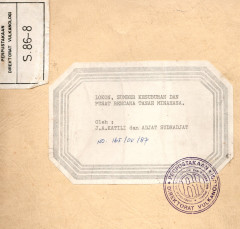
Lokon, Sumber Kesuburan dan Pusat Bencana Tanah Minahasa
Gunung Lokon yang selama ini berdiri dengan tegak memayungi Tomohon, Minahasa, tiba-tiba murka, menghamburkan abu yang hitam pekat bergumpal-gumpal ke udara. Kota kecamatan Tomohon yang dikenal indah berhias bunga, berubah menjadi kelam bermuram Daun cengkih yang hijau segar merunduk layu ditimpa durja. abu yang turun dengan derasnya. Atap rumah semakin rapuh. Betapa tidak. Abu G. Lokon yang m…
- Edisi
- -
- ISBN/ISSN
- -
- Deskripsi Fisik
- 17hlm; gbr; peta
- Judul Seri
- -
- No. Panggil
- PVG S.86-8
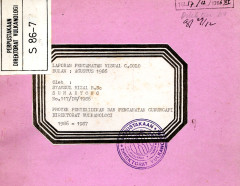
Laporan Pengamatan Visual G. Colo
G. Colo yang terletak pada posisi geografi 0°10' Lintang Selatan dan 121°36,5' Bujur Timur merupakan satu-satunya gunung api di kawasan Teluk Tomini, Sulawesi Tengah. G. Colo bertipe strato dan berdanau kawah serta mempunyai ketinggian 508 m di atas permukaan laut. Gunung api ini terletak memanjang sepanjang P. Una-una yang merupakan pulau subur dan potensial bagi pengolahan kopra. Tak dapat …
- Edisi
- -
- ISBN/ISSN
- -
- Deskripsi Fisik
- 8hlm; gbr; peta
- Judul Seri
- -
- No. Panggil
- PVG S.86-7

Petrokimia BOM G. Api G. Lokon Sulawesi Utara Letusan 4 Sept. 1986
Pada bulan September 1986 tepatnya tanggal 4 September 1986, G. Lokon yang terletak di kecamatan Tomohon, Minahasa,Sulawesi Utara terjadi kegiatan peletusan. Sehubungan dengan ini maka Sdr. Suratman BSC dari Sub Dit. Pengamatan Gunungapi, Direktorat Vulkanologi telah mengumpulkan bom gunung api sebanyak dua buah conto (Lok-A/86 dan Lok.-B/86). Conto tersebut diambil sekitar 400 m di sebelah ten…
- Edisi
- -
- ISBN/ISSN
- -
- Deskripsi Fisik
- 18hlm; gbr
- Judul Seri
- -
- No. Panggil
- PVG S.86-6

Verifikasi Peta Kawasan Rawan Bencqana Gunung Tempang, Sulawesi Utara
Dalam rangka mendukung pembangunan nasional serta untuk terwujudnya agenda proritas Nawacita maka diperlukan percepatan pelaksanaan Kebijakan satu peta (KSP) pada tingkat ketelitian peta skala 1:50000. Program KSP ini bertujuan untuk terpenuhinya satu peta yang mengacu pada satu referensi geospasial, satu standar, satu basis data, dan satu geoportal.
- Edisi
- -
- ISBN/ISSN
- -
- Deskripsi Fisik
- 20 hlm;gambar
- Judul Seri
- -
- No. Panggil
- PVG S.17-03
Terjemahan Makalah : Fase awal gempa letusan yang menyertai letusan vulkanik …
Kami memeriksa fase awal gempa letusan yang menyertai letusan vulkanik di gunungapi Lokon-Empung di Indonesia untuk mengungkap proses pemicu letusan eksplosif. pada 2012-2013, 56 letusan vulkanian di lokon empung diamati menggunakan jaringan pengamatan sementara yang terdiri dari empat seismometer broadband dan dua mikrofon infrasonik pada jarak 1,6-6,8 dari kawah aktif.
- Edisi
- -
- ISBN/ISSN
- -
- Deskripsi Fisik
- 36 hlm;gambar;grafik;tabel
- Judul Seri
- -
- No. Panggil
- PVG S.16-17
Laporan Pembuatan Dokumentasi dan Pengumpulan bahan Informasi Bencana Geologi…
Menurut catatan, letusan terakhir G. Soputan terjadi pada bulan Januari 2016. Pemantauan secara visual maupun instrumental gunungapi soputan ini dilakukan dari Pos Pengamatan Gunungapi Soputan di Desa Silian Tiga, Kecamatan Silian Raya, kabupaten Minahasa Tenggara. Sistem pemantauan terhadap kegiatan G. Soputan sampai saat ini dilakukan dengan pemantauan visual, deformasi dan seismik.
- Edisi
- -
- ISBN/ISSN
- -
- Deskripsi Fisik
- 49 hlm;gambar;foto;tabel
- Judul Seri
- -
- No. Panggil
- PVG S.16-16
Laporan analisis potensi bencana Gunungapi Ruang, Sulawesi Utara.
Gunungapi Ruang (714 m) yang merupakan gunungapi strato soltaire berbentuk kerucut terpancung (dibangun oleh aliran lava dan endapan piroklastik), merupakan sebuah gunungapi yang tumbuh di lingkungan laut membentuk pulau yang tingginya 700 m dari dasar laut (kemmerling, 1923). Gunungapi ruang terletak di sebelah barat daya pulau Tagulandang.
- Edisi
- -
- ISBN/ISSN
- -
- Deskripsi Fisik
- 24 hlm;gambar;tabel
- Judul Seri
- -
- No. Panggil
- PVG S.16-15
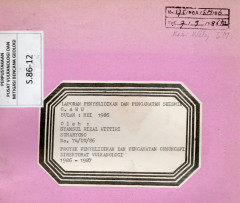
Laporan Penyelidikan dan Pengamatan Seismik G.Awu, Mei 1986.
G. Awu terletak di ujung baratlaut P.Sangir-Besar pada posisi geografi 3°40' Lintang Utara dan 125°30' Bujur Timur, tingginya lk. 1320 m dari muka laut (Peta 1). Kawah G. Awu merupakan sebuah kawah tunggal berukuran 1550 x 1200 m2 dan berair sehingga merupakan sebuah da- nau, volumnya ditaksir 3,47.106m3'. Air danau kawah ini lah yang merupakan salah satu unsur bahaya erupsi, karena dapat men…
- Edisi
- -
- ISBN/ISSN
- -
- Deskripsi Fisik
- 10hlm; gbr
- Judul Seri
- -
- No. Panggil
- PVG S.86-12
 Karya Umum
  Filsafat
  Agama
Agama  Ilmu-ilmu Sosial
  Bahasa
  Ilmu-ilmu Murni
  Ilmu-ilmu Terapan
  Kesenian, Hiburan, dan Olahraga
  Kesusastraan
  Geografi dan Sejarah